
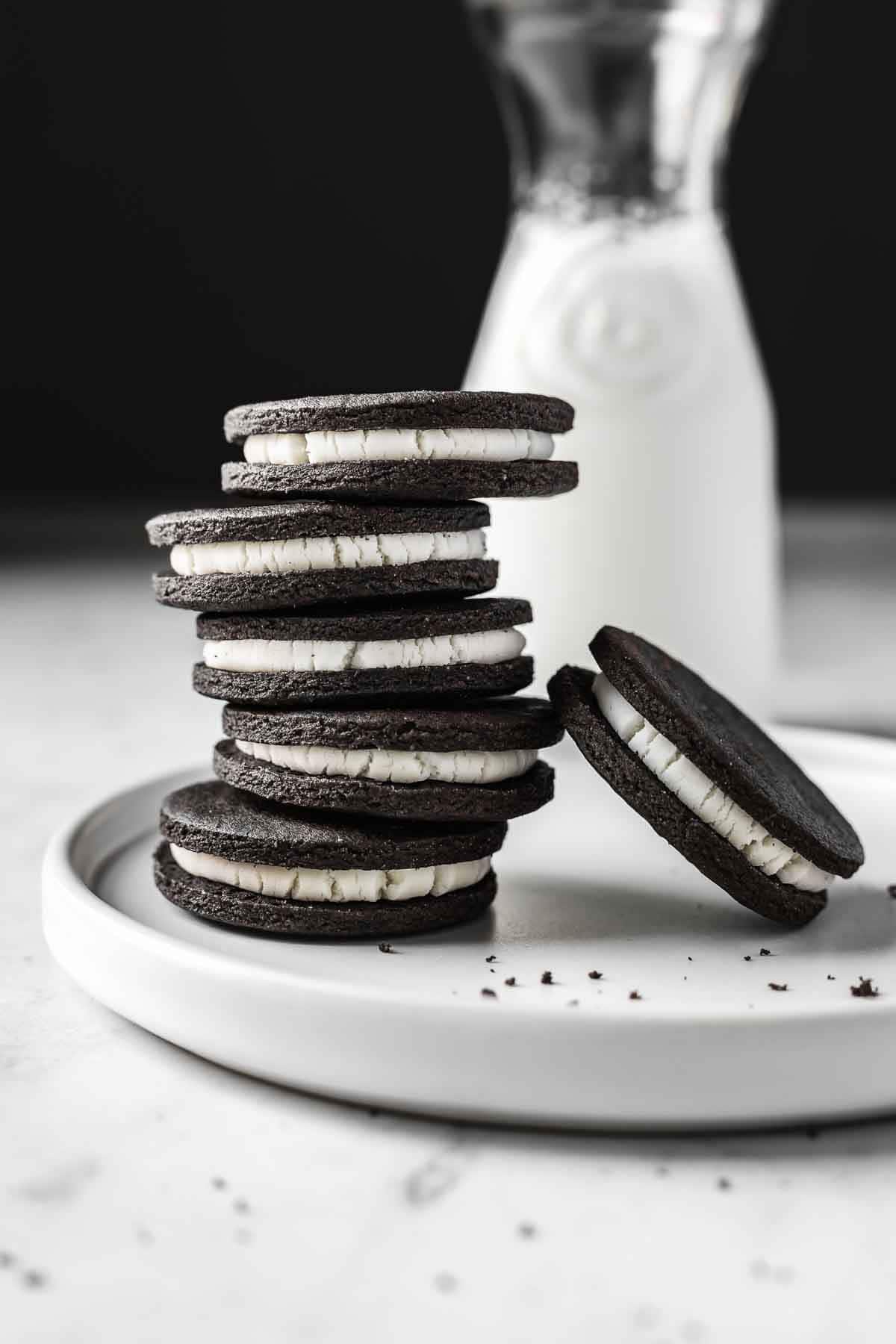
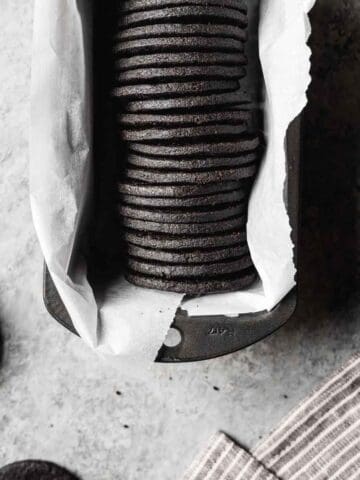
This recipe for homemade Oreo cookies is my version of the classic chocolate sandwich cookie. With dense, dark chocolate cookies and a thick vanilla creme filling, these cookies capture all the familiar flavor with a fresher, richer taste. I set out to match the ingredients of the originals as closely as possible, so these are also egg-free, dairy-free, and vegan-friendly.
Satisfy your urge for these iconic cookies with this easy, from scratch homemade Copycat Oreo recipe, using familiar ingredients.
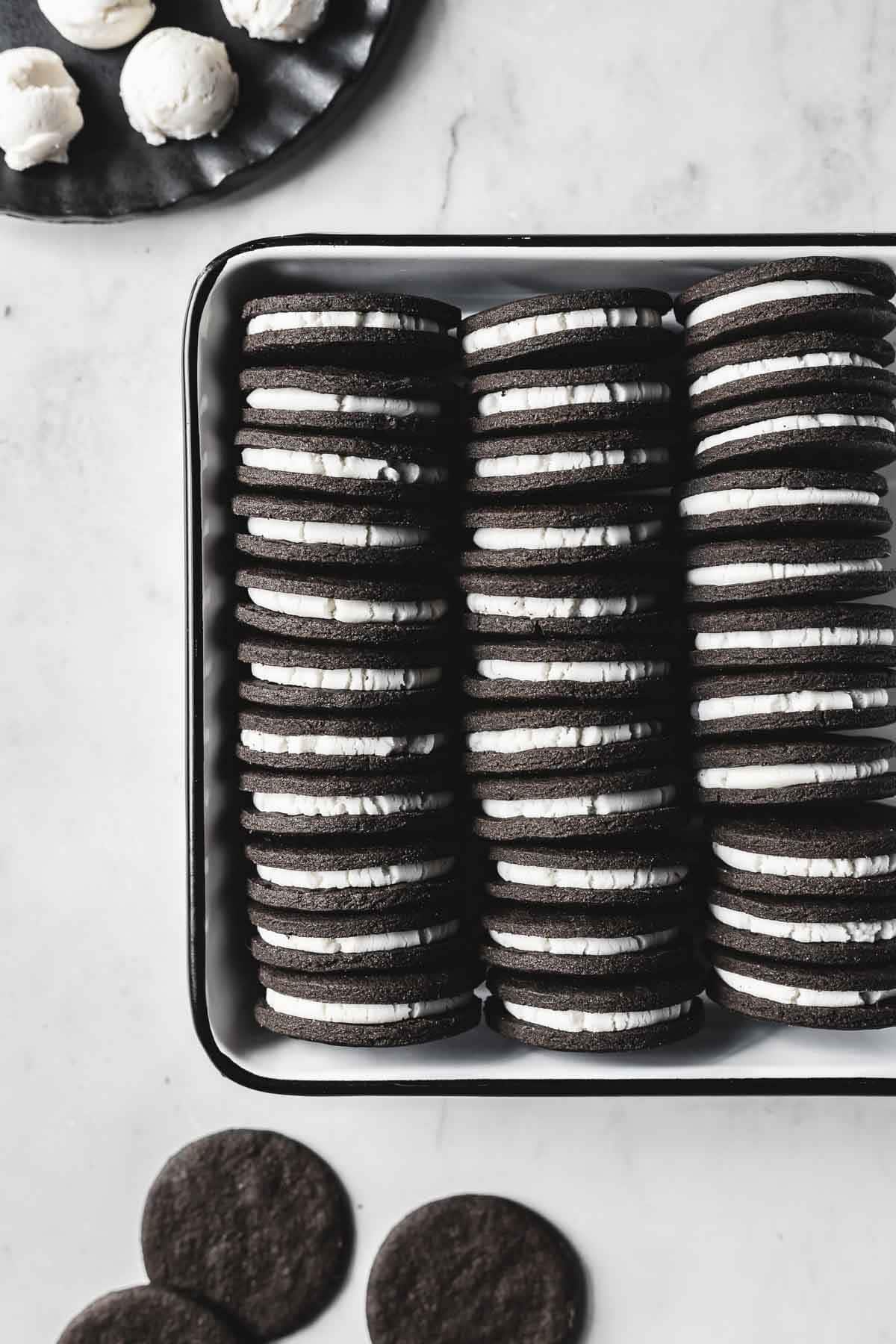
After developing a recipe for chocolate wafer cookies with their signature black cocoa color and flavor, I was eager to create an Oreo cookie recipe. I knew it would be a challenge to recreate a commercial cookie favorite, but I didn't anticipate it taking three full weeks of recipe testing. However, all that effort paid off. I'm SO happy with the results - I can't wait to for you to make these!
With only the Oreo cookie ingredients from the back of the package as a guide, I made 14 different versions of the Oreo cookies in order to hone in on just the right color, texture and flavor, down to the sound of the cookie as it snaps. The Oreo filling recipe took me 11 tries to perfect. I wanted it to have the same taste, feel and thick consistency as the store-bought version.
I also wanted the cookies and filling to be egg free, dairy free and vegan, just like Oreos. There are plenty of butter-based recipes out there, but my goal was to closely mimic the original. Butter in the cookies and filling, while delicious, changes the flavor.
These have palm shortening in both the cookie and the filling. It's solid at room temperature and has a pure white color and neutral taste. Palm shortening is not hydrogenated and contains no trans fats.
Needless to say, we've eaten a LOT of homemade Oreos. I thought I'd tire of them, but I'm still happily reaching for the cookie jar. They're fresher and more flavorful all around, but similar enough in look, feel and taste to the packaged variety to satisfy picky eaters.
I scraped the filling off a real Oreo and replaced it with my own version; my kids couldn't tell the difference. (This from girls who know when I've used store brand condiments). My cookie version, while lacking the classic pattern, shares the unique combination of dense snap, light crunch, and dark cocoa flavor.
As with all my recipes (but this one especially), I highly recommend you use a digital scale to measure your ingredients. In my recipe tests, I frequently made minimal changes (like adding a Tablespoon of flour, which is 7.5 grams) that had a significant impact on the outcome.
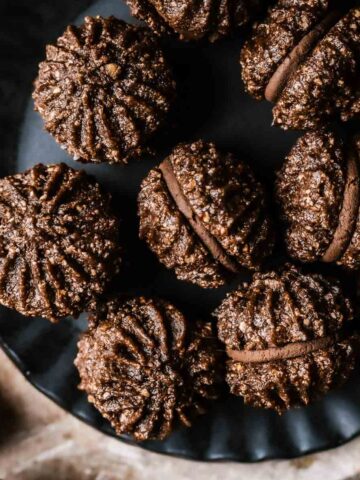
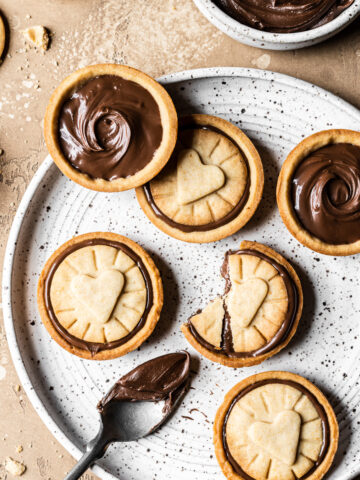
For more chocolate sandwich cookies, try these chocolate coffee mascarpone cookies or chocolate hazelnut Baci di Alassio. And for another cookie recipe inspired by a store brand, try these Nutella Biscuits!
More of a vanilla cookie person? Check out my recipe for Golden Oreos!
Jump to:
Yield
- This homemade Oreo recipe makes 44 filled sandwich cookies.
- That's 88 cookies that are 1¾ inches (2 cm) in diameter.
- The Oreo filling recipe makes about 250 grams of filling, enough to fill all 44 sandwiches with a few bites left over for taste testing.
- For comparison, a standard pack of Oreos contains 36 cookies, and a family pack has 48 cookies.
Ingredients
I've very carefully tested this Oreo cookie recipe, and each ingredient below plays a crucial role in helping your homemade Oreos turn out just like the originals.
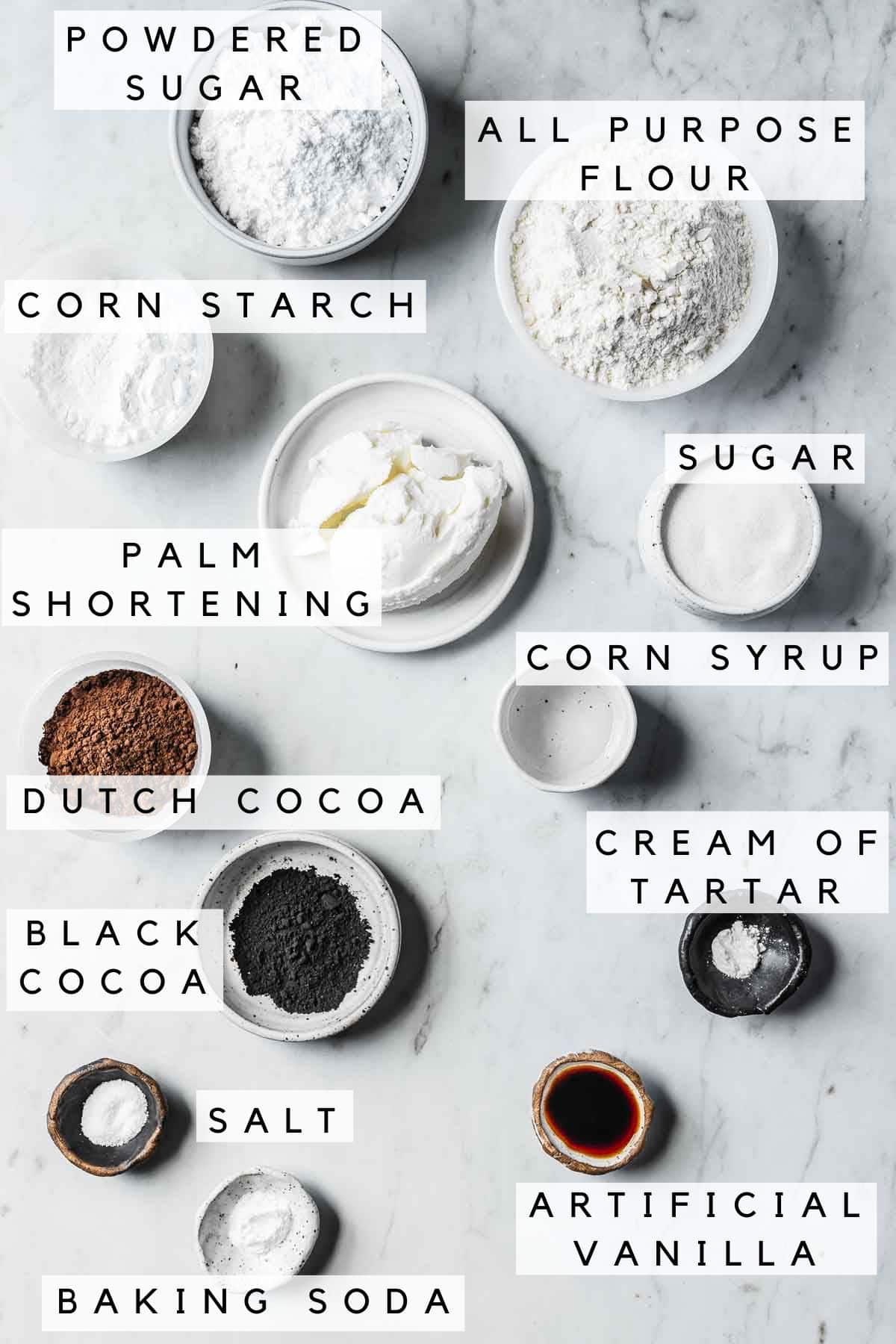
* See recipe card for full list of ingredients and quantities.
All purpose flour - Sift your flour to avoid white lumps in the dark chocolate dough.
Shortening - This recipe specifically calls for room temperature palm shortening. I use Spectrum brand palm shortening, which is sustainably sourced and ethically harvested.
Shortening is 100% fat (no water content, unlike butter), which is key to achieving a crisp, snappy cookie and a thicker cookie filling with less powdered sugar.
Its neutral flavor and bright white color creates a filling where the vanilla flavor plays center stage. It also has a higher melting point than butter so the filling doesn't need refrigeration to stay firm.
I've also tested the cookies and the filling with Crisco, which is 100% vegetable shortening made of mostly soybean oil and some palm shortening. It works nicely in the cookie dough. I don't recommend it in the Oreo cream filling. Crisco creates a noticeably greasy mouthfeel, which isn't present with 100% palm shortening.
Granulated sugar - I like to use granulated sugar for the cookies as it's always in my pantry. Powdered sugar can create a smoother but slightly more dense dough. I like the texture of granulated sugar here.
Powdered sugar - Powdered sugar sweetens and thickens the homemade Oreo filling.
Cornstarch - Cornstarch add lightness and a more powdery texture to the cookies.
Light corn syrup - Clear, light corn syrup adds moisture (to help bind) and density to the cookies.
Dutch cocoa powder - Dutch cocoa has been alkalized, which creates a darker, smoother flavored cocoa with less acidity. It's a critical ingredient in this recipe as it provides the majority of the rich chocolate flavor. Don't use natural cocoa, which will react with the leaveners and change the texture.
Black cocoa powder - Black cocoa has been highly alkalized and is very dark - almost black in color. It has less chocolate flavor than Dutch cocoa, so I've used just enough to achieve the signature dark Oreo color and taste while still letting the rich taste of Dutch cocoa shine through.
I tried plenty of versions without black cocoa, but found it was a critical ingredient (in my opinion*). If you substitute Dutch cocoa, you'll have a great cookie, but it won't be an Oreo copycat.
Black cocoa is an ingredient you'll likely have to purchase online, but it's worth it and will last you a long while! I recommend Cocoa Trader, King Arthur and Modern Mountain brands.
* Stella Parks' Oreo cookie recipe uses only Dutch cocoa and calls for heavily dusting the exterior of the cookies with Dutch cocoa when rolling. The cocoa-dusted cookies turns black when baking.
This is a genius shortcut method, but in my recipe tests didn't provide a traditional "Oreo" flavor to my cookies. And while the exterior of the cookie baked up black, the interior was still a much paler brown.
Kosher salt - Desserts taste better with a bit of salt! I use Diamond Crystal kosher salt. Salt enhances the chocolate cookie flavor, and helps temper the sweetness of the filling.
Imitation vanilla flavoring - To best mimic the sweet, bakery-style, vanilla-forward flavor of Oreo cookies, it's important to use imitation vanilla, which has a very specific flavor.
I feel strange even writing that, since 99% of the time I use pure vanilla extract in my baking. This is one exception. Feel free to substitute with pure vanilla, but understand that it will change the taste, especially in the filling!
Baking soda - Baking soda provides a bit of leavening.
Cream of tartar - Cream of tartar is a powdered acidic leavening agent. Without the cream of tartar, the cookies don't have enough acidic ingredients to activate the baking soda. It's an important ingredient that gives just enough lift to create a lighter cookie that's not too dense or hard.
Instructions
These photos show the key steps in making your homemade Oreos, but be sure to follow the recipe card below for all the details.
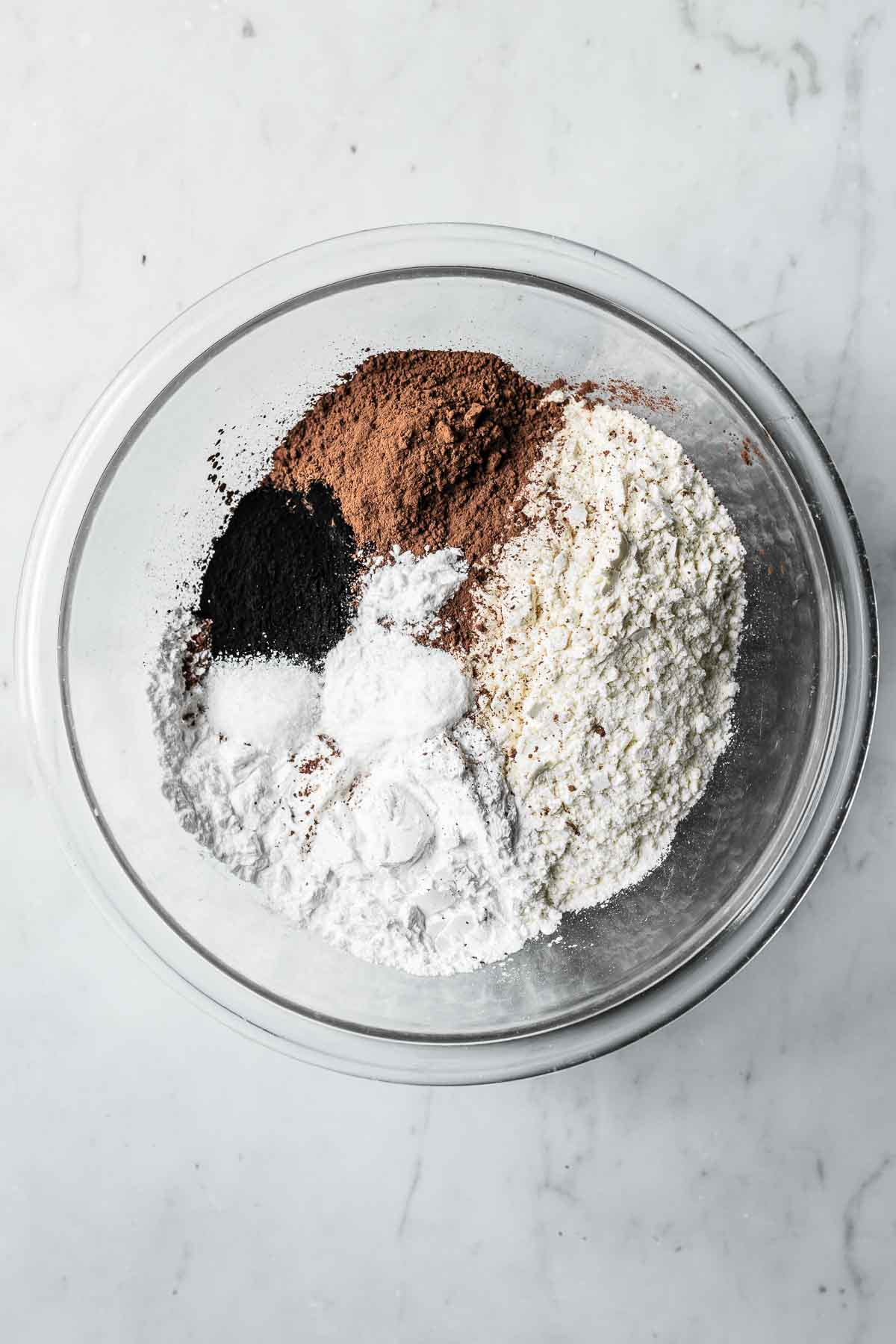
Combine sifted flour, cornstarch, cocoa powders, baking soda, salt and cream of tartar in a medium bowl.
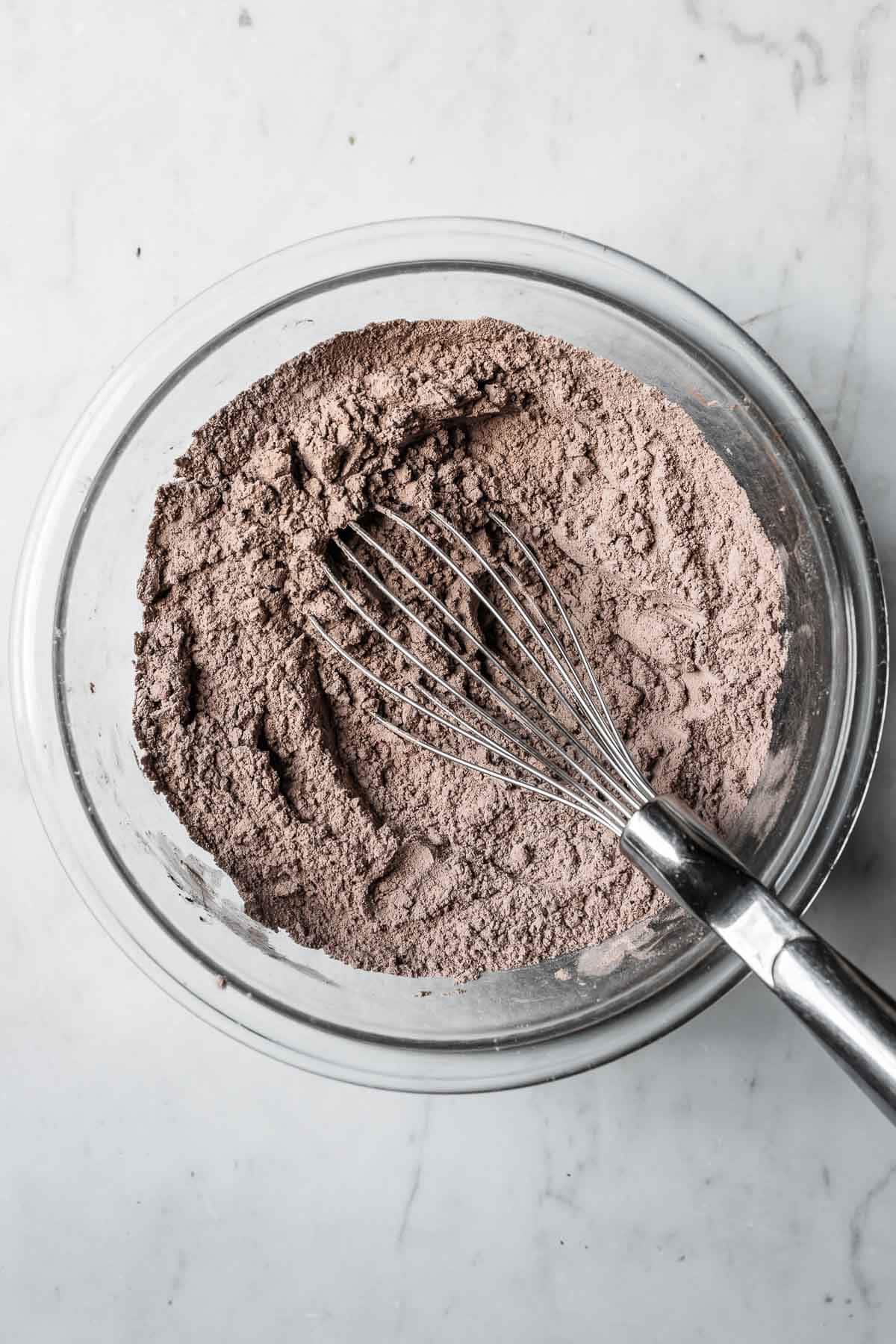
Whisk until fully combined and set aside.
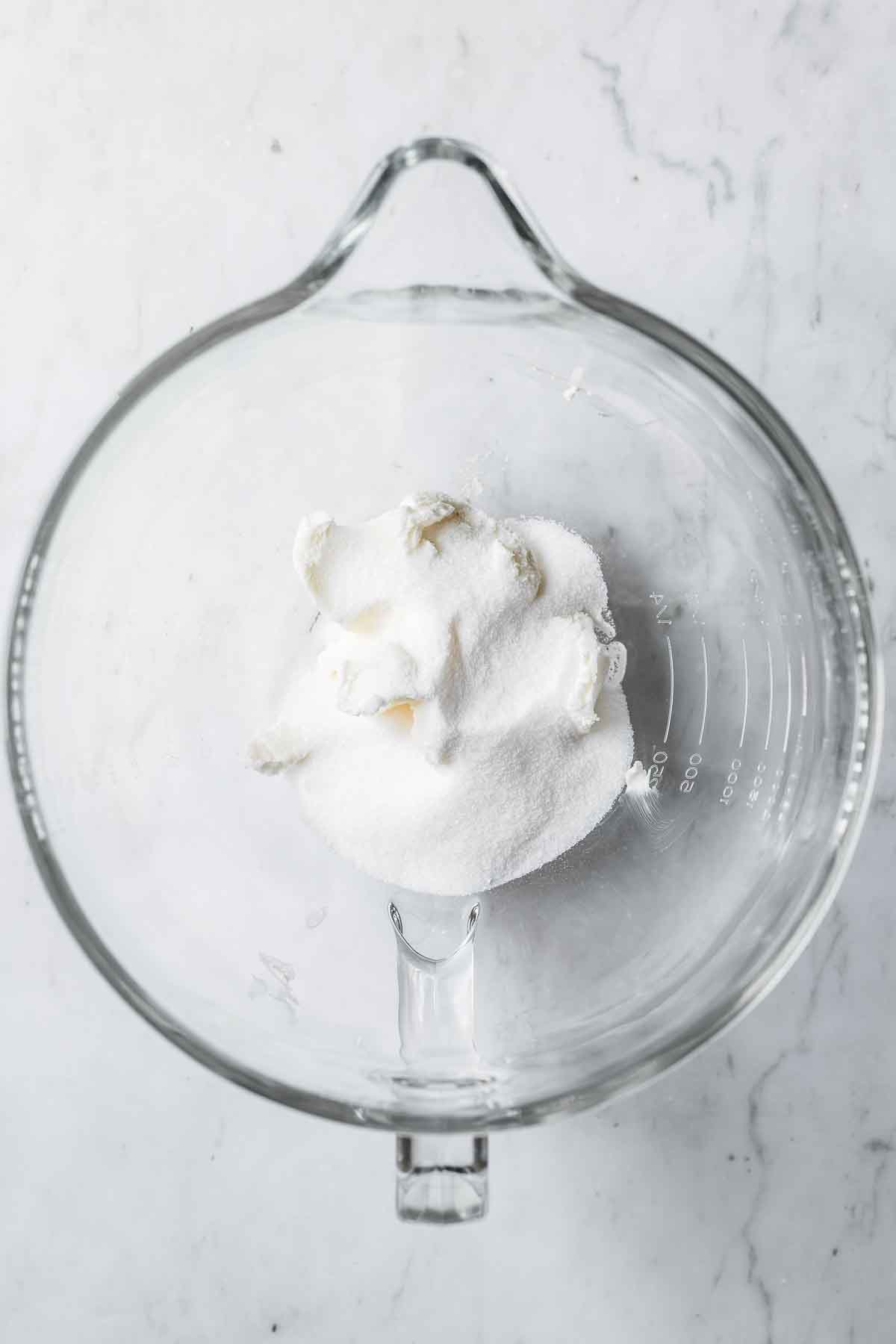
Add shortening and granulated sugar to a large mixing bowl.
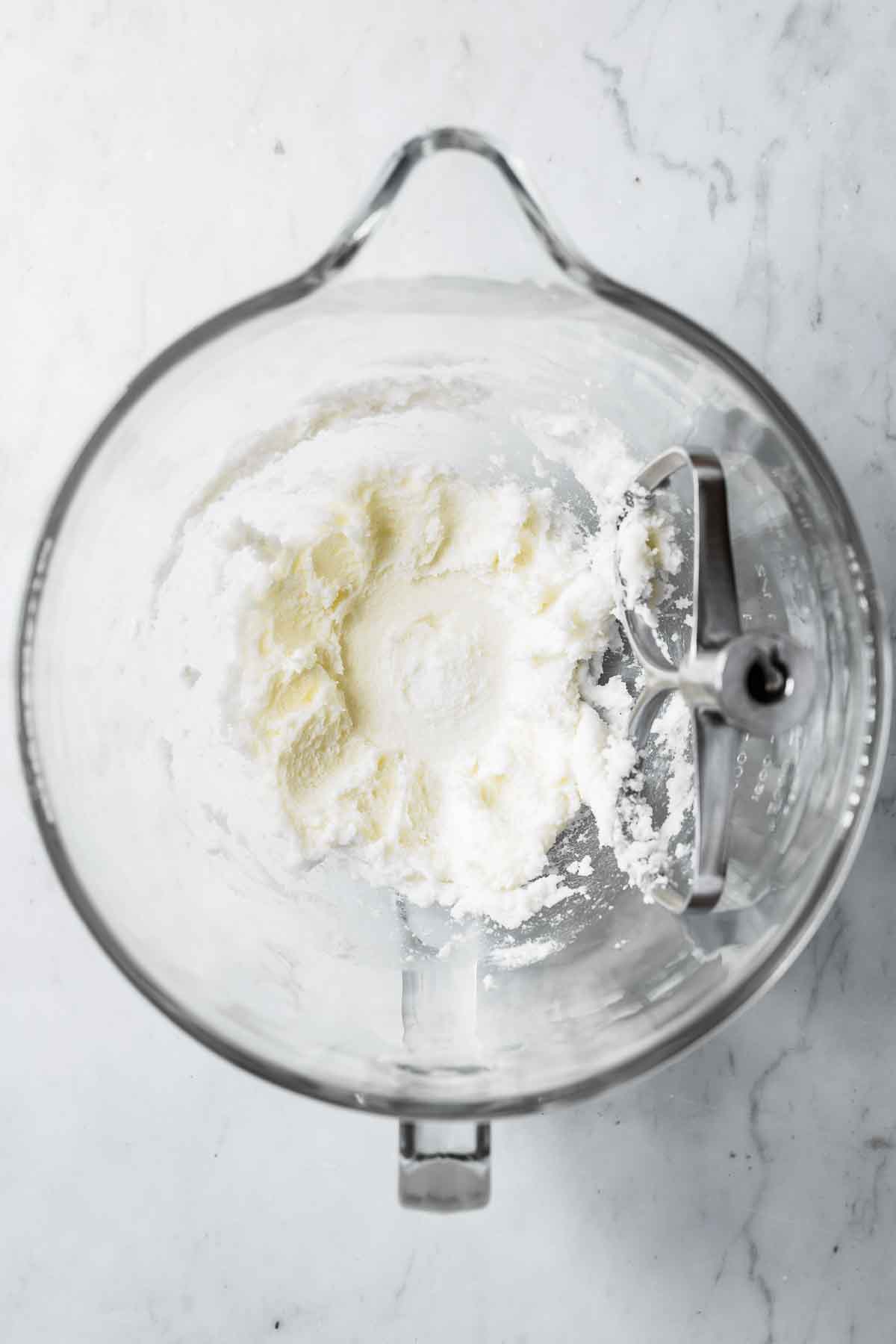
Mix well until combined.
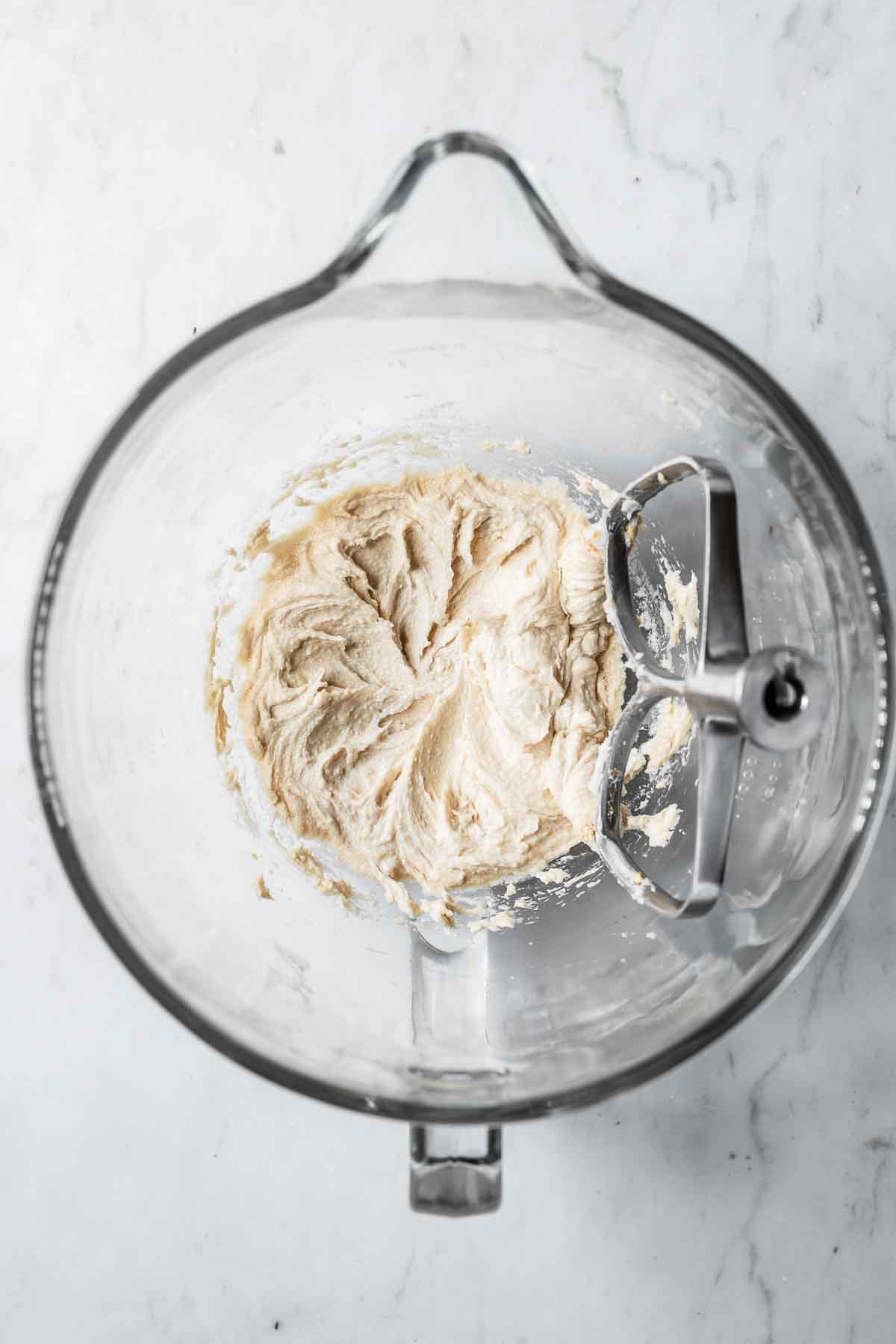
Add corn syrup and vanilla, and mix until fully incorporated. Scrape bowl as needed.
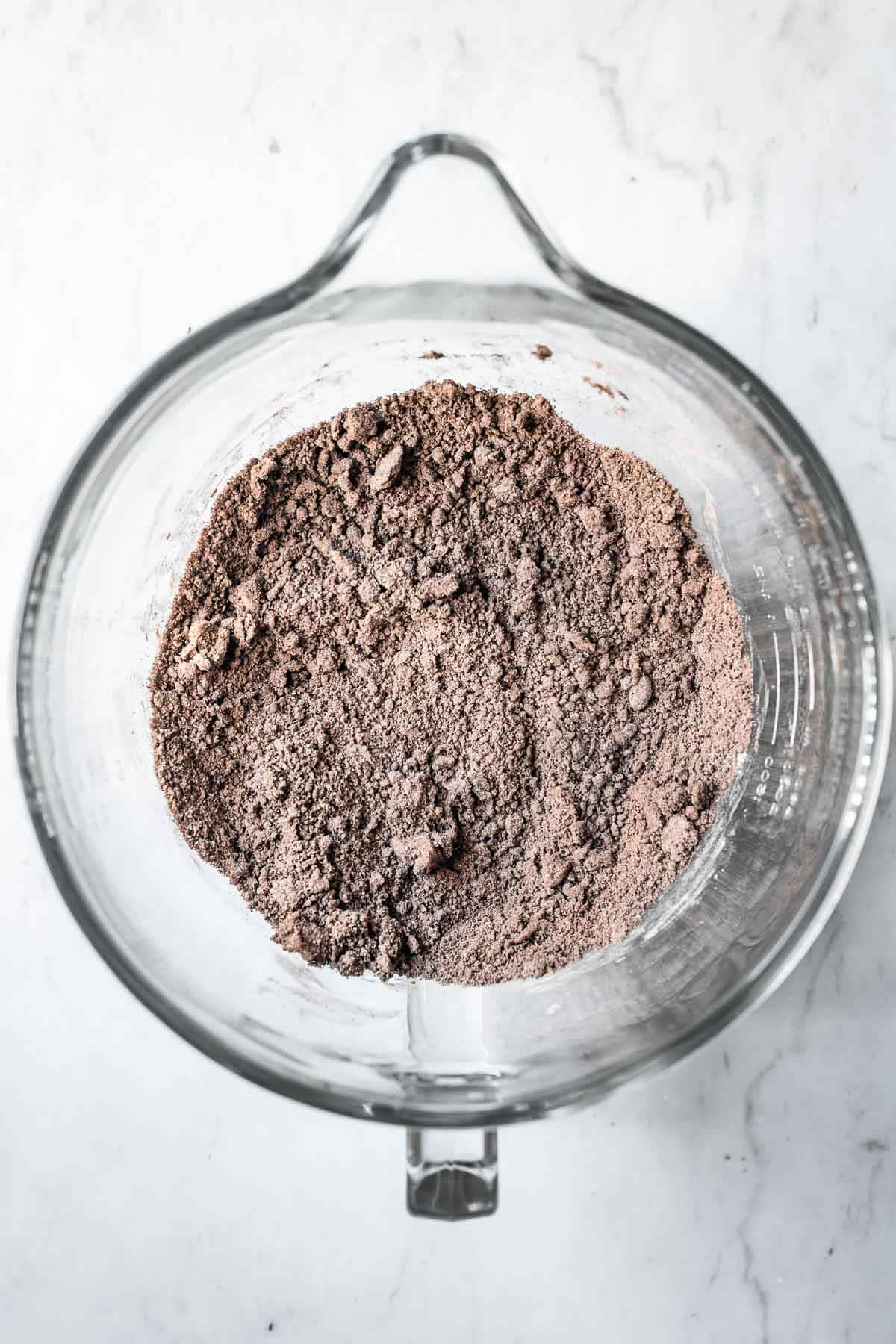
Add dry ingredients and mix on low speed for about 1 minute.
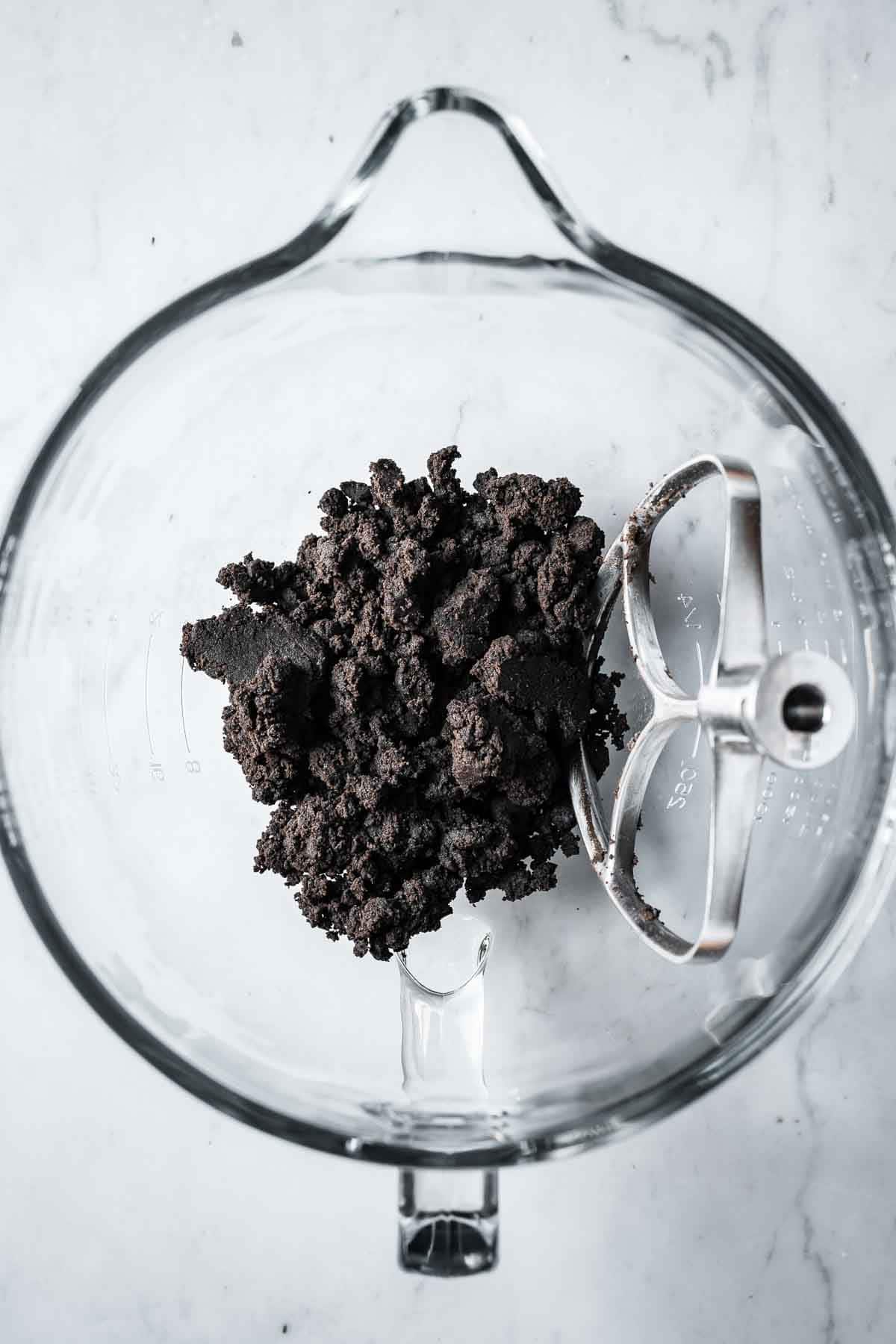
Scrape bowl and paddle well, and mix on low until dough comes together, about 30 seconds to 1 minute.
If dough doesn't come together when fully mixed, use your hands to squeeze it together into clumps. This will help warm up the palm shortening enough for the dough to bind into one large ball.

Divide dough into 2 even pieces.
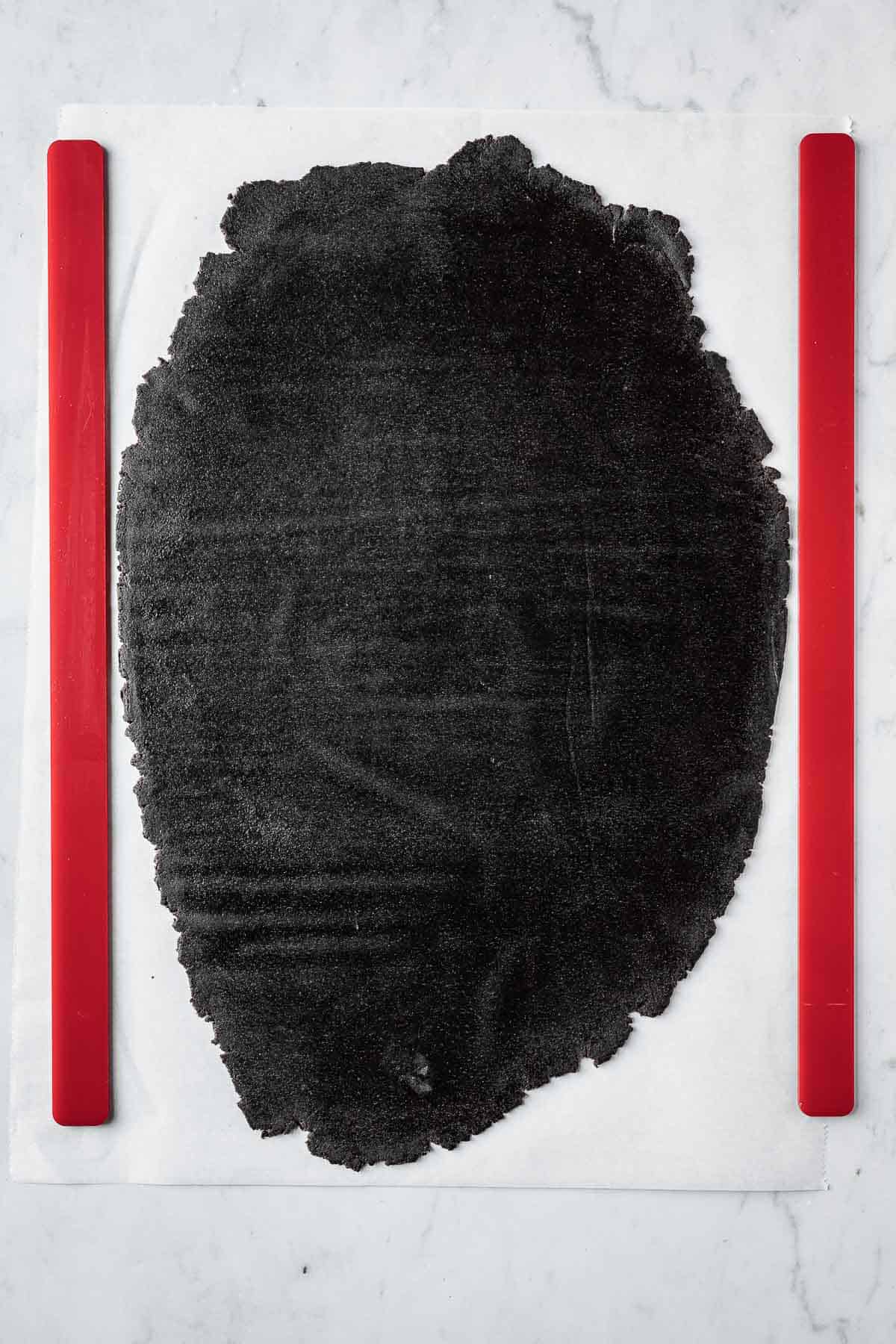
Roll one piece between two sheets of parchment paper to a thickness of ⅛ inch (3 mm).
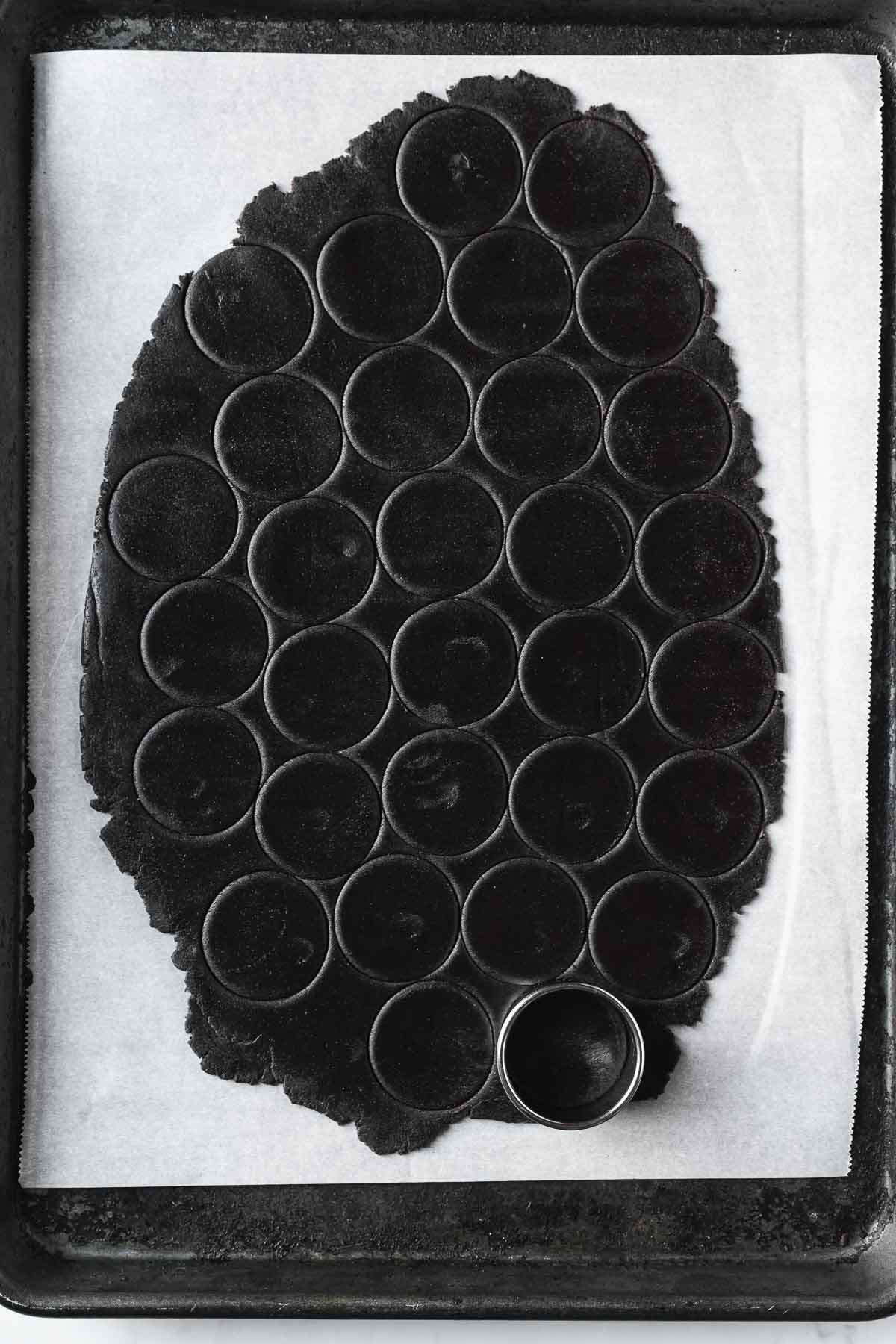
Cut out circles using a 1¾ inch (4.5 cm) round cookie cutter.
If dough cutouts are still cool enough to be workable, proceed. If dough is sticky and warm, place in fridge on a baking sheet 2-3 minutes before moving on to next step.
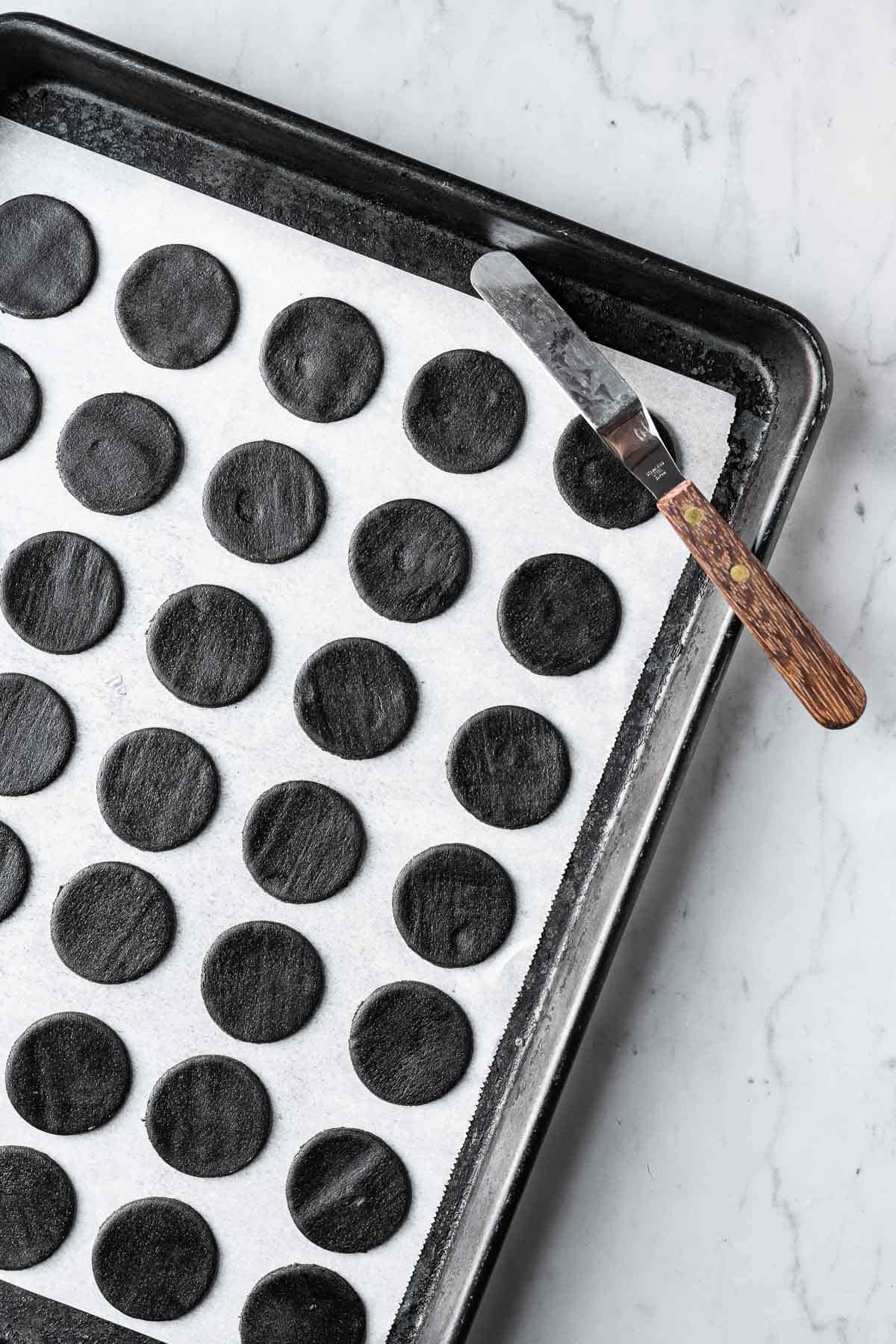
Slide a small offset spatula under the base of each cookie cutout to loosen it from the parchment. Using the spatula, transfer cutouts to a parchment lined baking sheet. Cookies can be placed quite close together. Repeat rolling and cutting with second portion of dough and any leftover scraps.
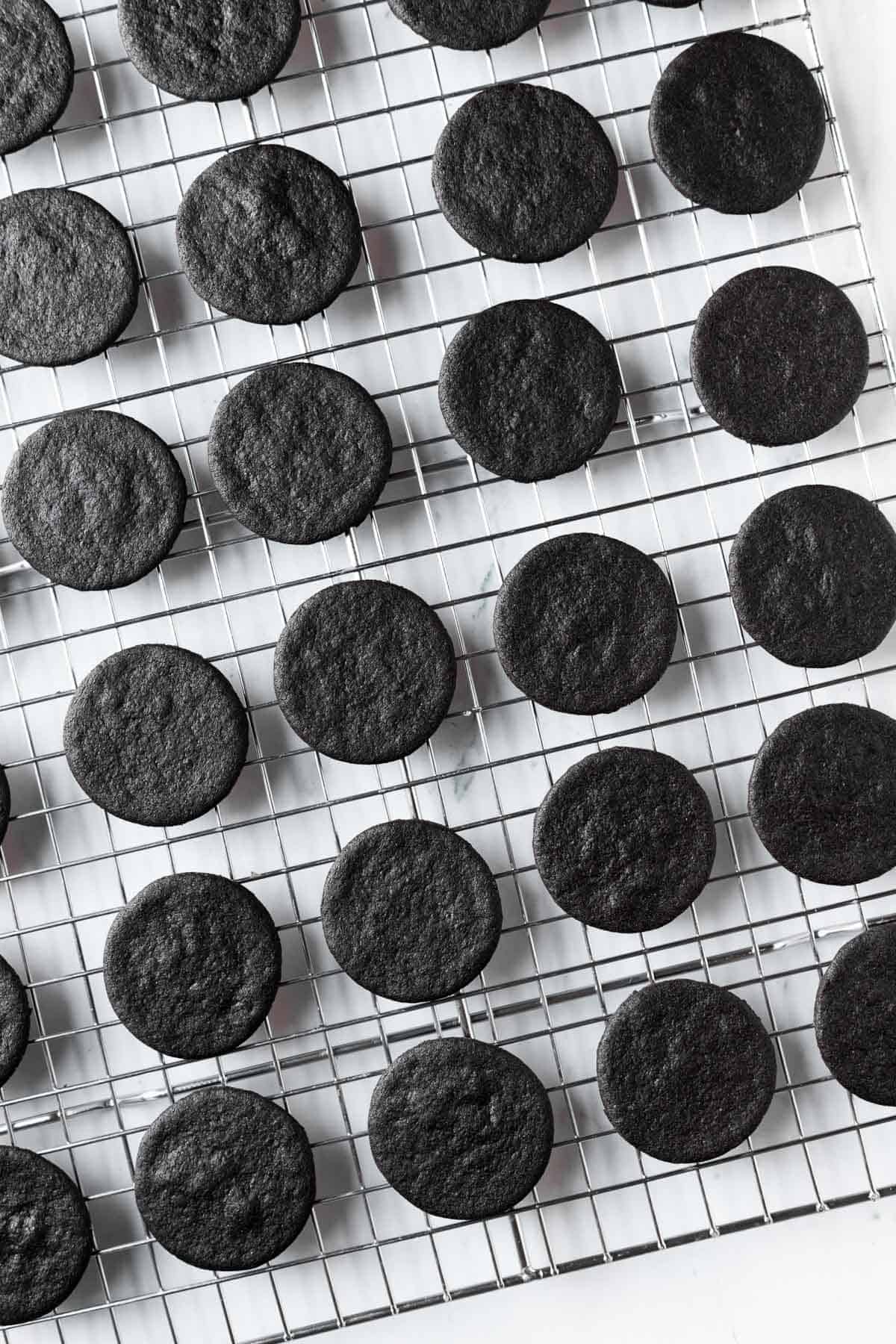
Bake one pan at a time on center rack of oven for 11 minutes at 350 degrees Fahrenheit (177° Celsius, Gas mark 4).
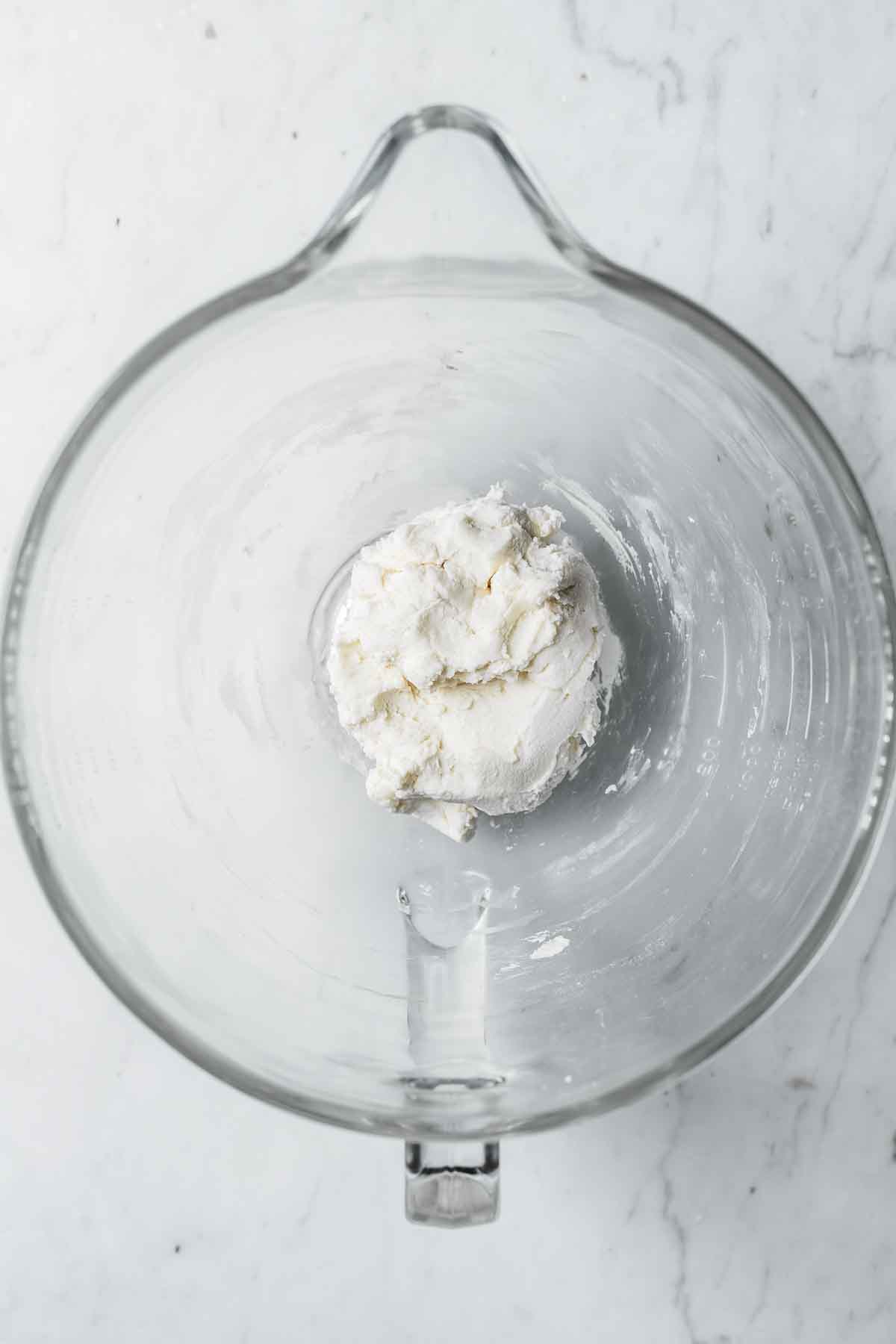
Prepare one batch of homemade Oreo cream filling according to the recipe instructions.
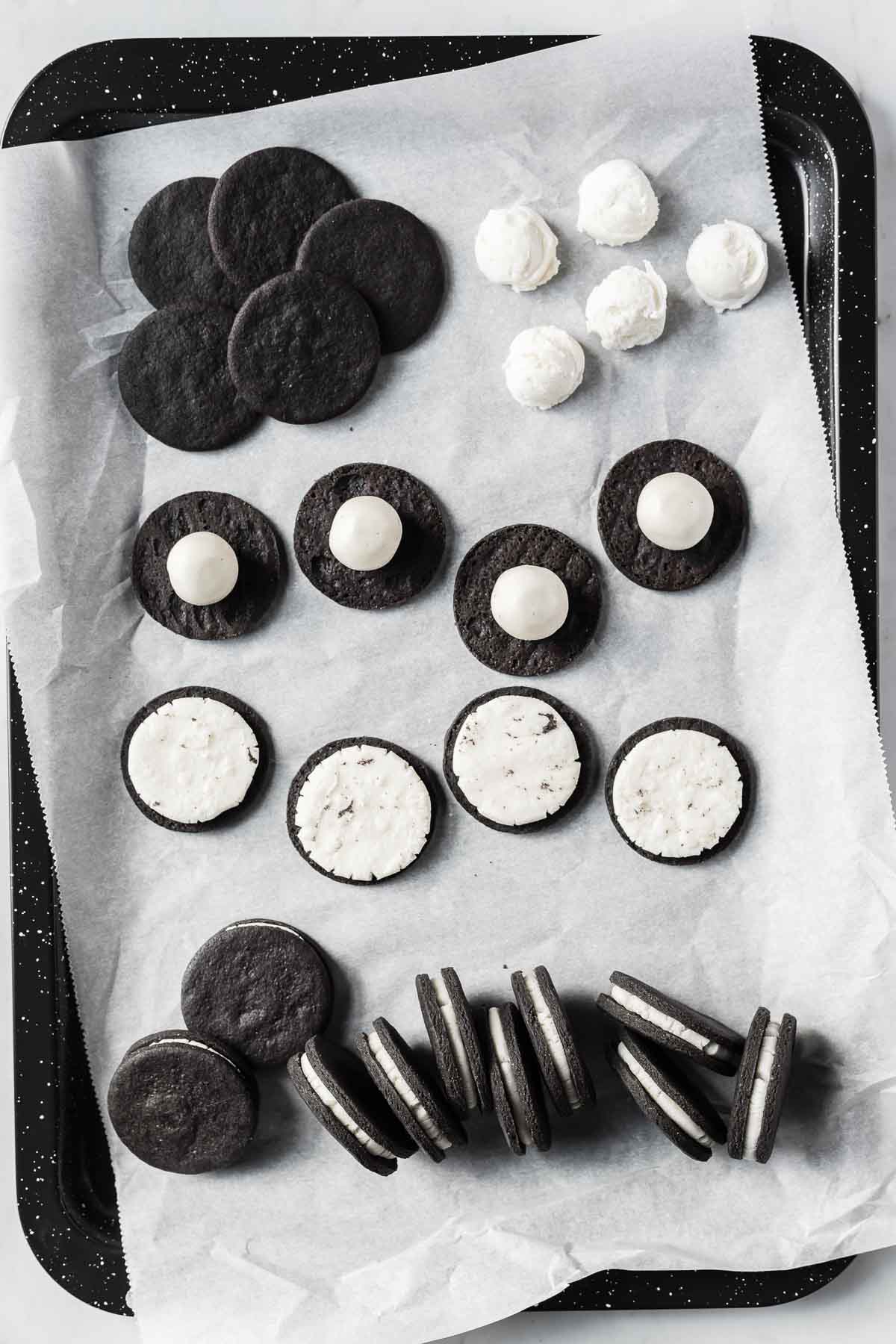
Scoop filling into 1 teaspoon (5 gram) portions. Roll between your hands to form a round ball. Place ball on bottom side of a cookie, and top with another. Press down gently to stick together, stopping before filling reaches edges of cookies.
Rolling each scoops of filling between your hands will warm it slightly, making it softer and easier to press the cookies together without breakage.
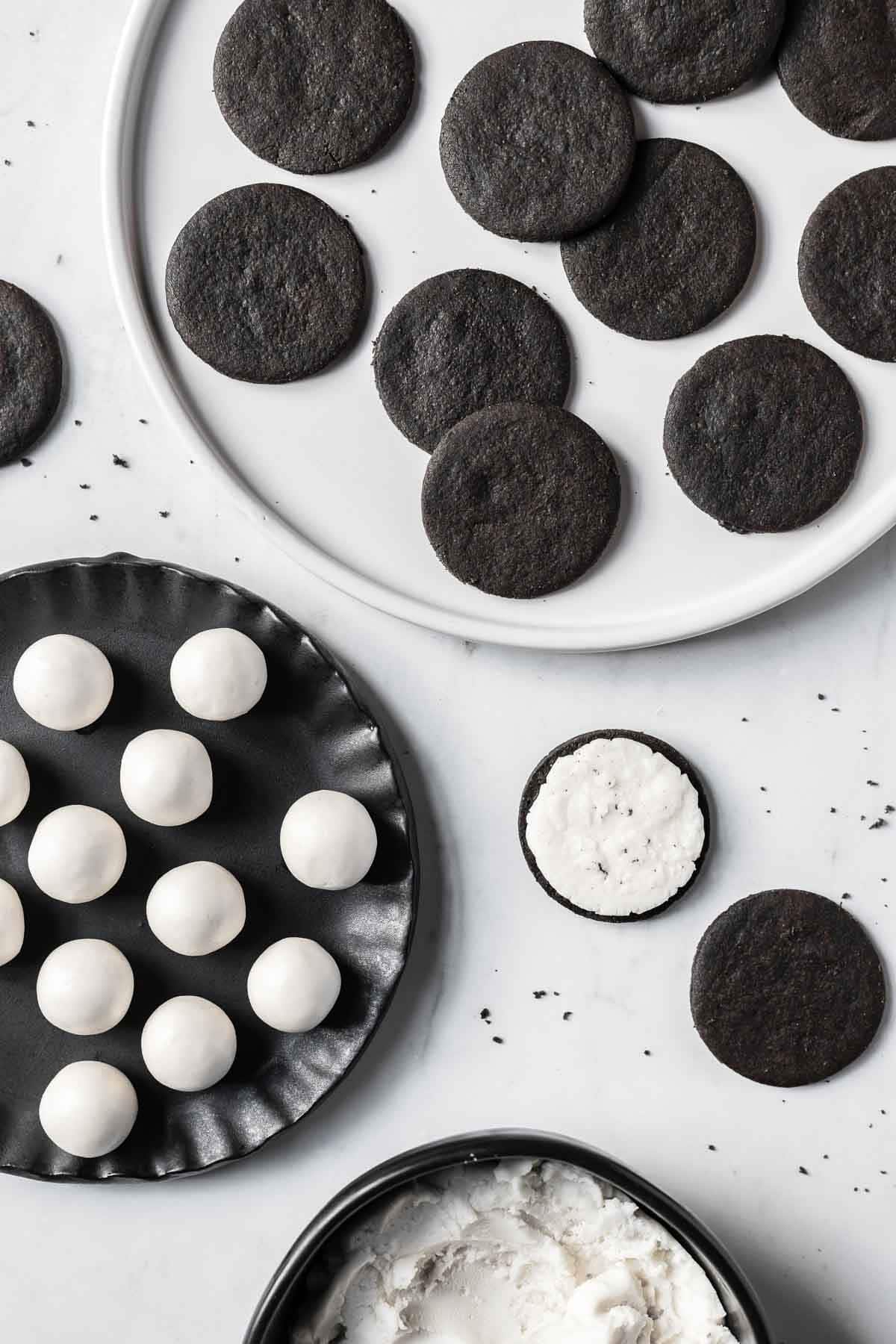
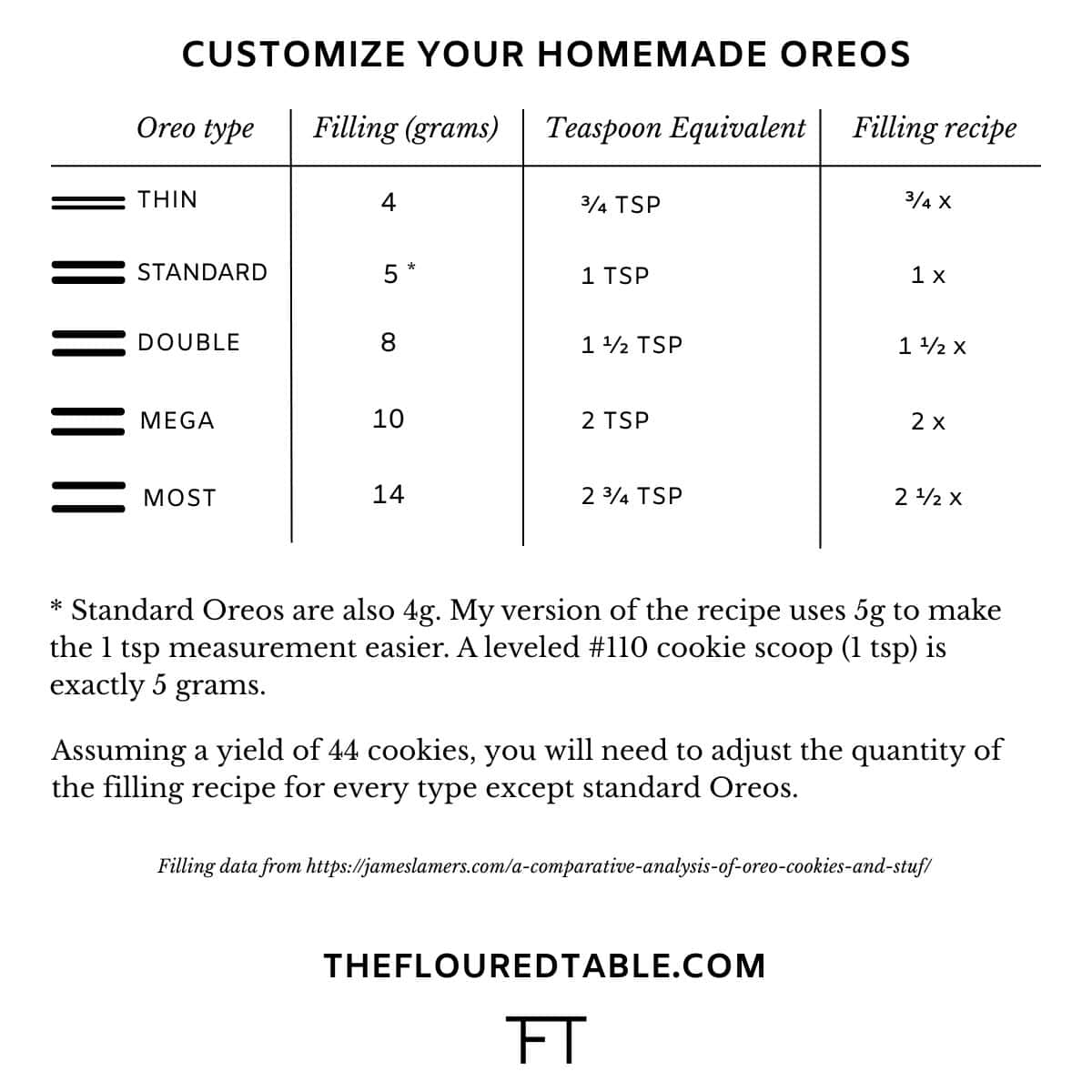
Customize filling thickness
Adjust how much Oreo filling goes into your cookies to suit your taste - from a thin layer to a thick, overstuffed creme.
Customize filling flavors
The classic vanilla filling is my go-to for these cookies, but you can easily change the flavor. See my homemade Oreo cream filling for tested variations including chocolate, coffee, mocha, lemon, orange, matcha, and lemon poppy seed. You can also combine two flavors in a single cookie for a split or layered filling.
Equipment
For uniform thickness: These cookies really benefit from rolling the dough to an even thickness. The best way to do this is with a set of pastry guides. I use these acrylic guides from Fat Daddio's because I can still use my favorite rolling pin and they help achieve a crisp, uniform batch.
For perfect circles: A good set of round cutters is essential. I use this 11-piece round set because it gives you every size you could possibly need and the edges are sharp for a clean cut.
For Baking: I use and recommend these USA Pan half sheet baking pans at King Arthur Flour for their durability and consistent results.
For most cookies, a light-colored, heavy-duty aluminum pan is the best choice. It promotes even baking and prevents the bottoms from getting too dark.
For dark cookies like these, you can get away with a darker pan, but the light-colored pan is the most versatile and reliable option.
For easy filling portions: A size #110 cookie scoop portions a 1 teaspoon (5 grams) scoop of creme filling, helping keep your filled Oreos uniform in size.
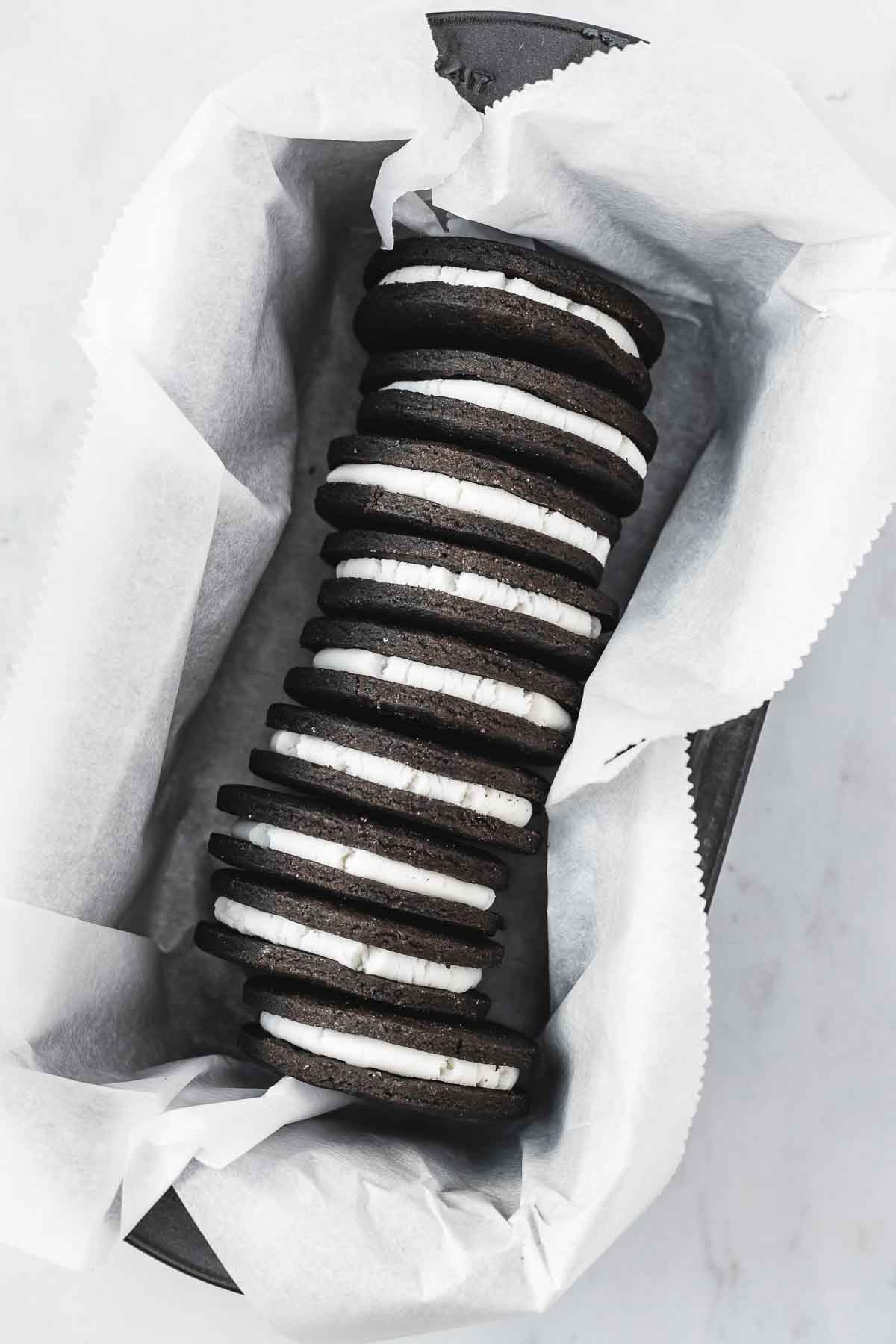
Love this recipe? Please leave a comment and star rating. ★★★★★ Your feedback, suggestions, and adaptations are very helpful to other bakers!
📖 Recipe
Oreo Cookies
INGREDIENTS
Oreo Cookies
- 165 grams all purpose flour, sifted
- 48 grams corn starch, sifted
- 20 grams cocoa powder, Dutch process, sifted
- 10 grams black cocoa powder, sifted (*see notes below)
- ½ teaspoon baking soda, sifted
- ½ teaspoon kosher salt, Diamond Crystal
- ½ teaspoon cream of tartar, sifted
- 96 grams palm shortening, room temperature (I use Spectrum brand)
- 125 grams granulated sugar
- 26 grams (20 mL) corn syrup, light
- 20 mL imitation vanilla extract, for authentic Oreo flavor
- 1 batch homemade oreo cream filling, (click for recipe)
INSTRUCTIONS
Oreo Cookies
- Preheat oven to 350 degrees Fahrenheit (177° Celsius, Gas mark 4) with a rack in the center of the oven.
- In a medium bowl, whisk together flour, corn starch, cocoa powders, baking soda, salt and cream of tartar. Set aside.165 grams all purpose flour, 20 grams cocoa powder, 10 grams black cocoa powder, 48 grams corn starch, ½ teaspoon baking soda, ½ teaspoon kosher salt, ½ teaspoon cream of tartar
- In the bowl of a stand mixer fitted with the paddle attachment, beat palm shortening and sugar together on medium-low until well combined. Scrape bowl down several times between mixing to fully incorporate ingredients.96 grams palm shortening, 125 grams granulated sugar
- Add corn syrup and vanilla. Mix on medium speed until fully incorporated. Scrape bowl.26 grams (20 mL) corn syrup, 20 mL imitation vanilla extract
- Add dry ingredients and mix on low speed for about 1 minute. Scrape bowl and paddle well, and mix on low until dough comes together, about 30 seconds to 1 minute.If your dough doesn't come together when it's fully mixed, use your hands to squeeze it together into clumps. Working the dough just a bit will help warm up the palm shortening enough for the dough to bind into one large ball.
- Gather dough together and divide into 2 equal portions. Working with smaller portions of dough means you'll extract more usable cutouts from each roll. This reduces re-rolling, which can activate more gluten and make the dough tougher. It can also lead to air in the dough, which creates bubbles when baked.
- Roll one portion between two sheets of parchment paper until ⅛ inch (3 mm) thick. I use pastry guides to ensure precise thickness. Remove top layer of parchment.
- Use a round cookie cutter to cut cookies into 1¾ inch (4.5 cm) circles. Use a small offset spatula to transfer cutouts to parchment lined baking sheet.The cookies will not spread - they can be placed quite close together. I can fit about 30-35 cookies on a half sheet pan.
- Bake one pan at a time for 11 minutes. Fully cool cookies on baking sheet.If a few of the cookies have bubbly tops, gently press them down with the bottom of a measuring cup. Press gently, don't compress the cookies. They should flatten back out.
- Gather scraps into a ball and roll again until all dough has been used. Repeat with second portion of dough.
- Mix one batch of homemade oreo cream filling according to recipe instructions.
Assembly
- Using a #110 scoop or a teaspoon, scoop a leveled amount of filling out of the bowl. Using your hands, roll it into a small ball. It should weigh 5 grams. Standard Oreo cookies have about 4 grams of filling per cookie. I prefer a bit more filling, so I've bumped it up to 5 grams per cookie.
- Turn a cookie upside down and place the ball of filling in the center. Place another cookie right-side-up on top of the filling and press gently.
- Pick the cookie up and turn it sideways so you can see the filling (this will help you press the filling evenly.) Gently press using both hands until the filling is the same thickness as one of the cookies. It won't quite extend to the edges.
- Repeat process until all cookies are filled.
EQUIPMENT
- Pastry guides (3 mm, ⅛ inch thick)
- 1¾ inch round cookie cutter (4.5 cm)
- #110 cookie scoop (1 teaspoon)
NOTES
- No mixer? You can mix the dough by hand with a spoon. The shortening and sugar mixture doesn't need to be creamed and fluffy, just very well combined.
- You can substitute Dutch cocoa for the black cocoa, but you won't achieve the signature Oreo color or taste without it.
- Black cocoa weight AND volume measurements are correct - my black cocoa weighs more per teaspoon than Dutch cocoa.
- I use imitation vanilla extract here (I know, weird!) rather than pure vanilla extract in order to best mimic store bought Oreo flavor. You can use pure vanilla, but it won't give the same sweet bakery-like vanilla flavor.
- I've tested the cookies and the filling with Crisco, which is 100% vegetable shortening made of mostly soybean oil and some palm shortening. It works nicely in the cookie dough. I don't recommend it in the Oreo cream filling. Crisco creates a noticeably greasy mouthfeel, which isn't present with 100% palm shortening.
- If your dough doesn't come together when it's fully mixed, use your hands to squeeze it together into clumps. Working the dough just a bit will help warm up the palm shortening enough for the dough to bind into one ball.
- I use a 1¾ inch (4.5 cm) round cookie cutter, which is almost exactly the same size as a real Oreo.
- If your rolled dough is beginning to soften up and the cutouts are too soft to transfer, place the dough on a baking sheet in the freezer for about 2 minutes - just long enough to firm it up a little.
- Dark cookies can be hard to judge by color alone. For these, trust your nose-in the last few minutes of baking, your kitchen should begin to smells like rich, dark chocolate. The cookies should no longer be glossy.
- The cookies are fragile straight from the oven and will firm up significantly as they cool. Resist the urge to move them too soon-let them cool completely on the baking sheet first.
- The dough can be made ahead. Wrap it well and store in an airtight container in the fridge for up to 1 week, or freeze for up to 3 months. When ready to use, defrost in the fridge, then let come to room temperature before rolling.
- Store filled cookies in an airtight container at room temperature for up to 1 week, or freeze for up to 3 months.
- While delicious served immediately, these cookies benefit from resting overnight once filled. The filling firms up nicely, and the flavors deepen, creating a more balanced texture and taste without losing that classic twist-apart quality.
- Custom filling amounts: For a batch that yields 44 cookies, use ¾x the filling for Thins, 1.5x for Double Stuf, 2x for Mega Stuf, and 2.5x for Most Stuf. Refer to my customizable filling chart for a visual reference.
- Custom filling flavors: For instructions on adapting the Oreo cream filling into flavors like chocolate, lemon, matcha and mocha, see the custom filling flavors section of the Oreo cream filling recipe.
Lisa says
OMGOSH! I made the crème filling to use in homemade Oreo ice cream. Well….it was so delicious, that I kept stealing little spoonfuls of it. I scraped the Oreo filling off the cookies and replaced it with your recipe. I’m astounded how delicious it is and far better than whatever comes from the factory. ( I recently watched a video that described what’s in the Oreo filling and it’s basically glue. Gross!)
Five Stars to you, Miss, for making a better and healthier version.
Kathleen Culver says
Ah, Lisa - you made my day!
I'm so glad that you enjoyed it. It's so good, it's a challenge to keep around!
Thanks so much for your lovely comment.
Kathleen
Mary Hughes says
My granddaughter and I made these and the flavor was right on with the store bought cookies. Our cookie was hard and more crispy than it should have been. I made the mistake of using coarse kosher salt instead of regular kosher salt. 12 cookies came out the same size and did not spread. However the other ones spread out. They were much thinner than store bought cookies. We used a 1/8” rolling pin band. We cooked them for 9 minutes. Next time we will try a 1/8 band and only cook them for 7-8 minutes. They also had many small holes in them. Maybe from the coarse salt. The filling was exactly like the store bought. Another try and I think we will be able to duplicate the look of yours. It was a fun experiment and we did a blind taste test to compare the two types of Oreos
Kathleen Culver says
Hi Mary,
Thanks for your input. Coarse salt will definitely have an impact.
I use Diamond Crystal kosher salt in my recipes.
I also recommend an oven thermometer as all ovens have their own quirks and yours might be a bit hotter!
Was it the second half of the cookies that spread? Perhaps the dough warmed up more.
There are lots of factors, but it sounds like you and your granddaughter are so very close.
I hope you try them again - enjoy!
Kathleen
Meghan says
Hello Hello!!! I am wondering, why specifically palm shortening? Have you tried Coconut oil or butter as a substitute? I did see Crisco as a substitute but after the potential for a greasy aftertaste, that just doesn’t sound appealing.
Honestly, I am just not wanting to go to the store and buy palm shortening when i have coconut oil and butter on hand. But if you have tried all other avenues and found that palm shortening is where it is at, I am more than happy to, just wanting to check. Thank you for showing me grace.
Kathleen Culver says
Hi Meghan!
My goal was to authentically reproduce an Oreo cookie, using the most similar ingredients possible.
Many homemade Oreo cookies use butter or coconut oil, but don't have the same authentic Oreo taste or texture.
People often comment about how those other recipes (the filling especially) have a flavor that's more like traditional buttercream.
Palm shortening is white, solid at room temperature (and remains solid to much warmer temperatures) and has no taste profile.
Butter imparts a (logically) buttery flavor, which comes through in the taste of the cookie and Oreo creme filling.
Coconut oil, especially if unrefined, tastes like coconut, and using either refined/unrefined risks having the creme filling soften/melt because it has a much lower melting point (about 76 degrees F) than palm shortening (starting at 96 degrees F).
I understand that it's a commitment both in size and price, but if you love Oreos, it's worth it!
Thanks for your questions,
Kathleen
April says
I dont get it! the filling... u added cornstarch, so the filling has raw cornstarch??
Kathleen Culver says
Hi April,
Yes, the filling has a small amount of corn starch.
As I mention in the recipe ingredient details, corn starch helps thicken the filling without adding additional sweetness.
There are only 8 grams (about 1 Tablespoon) of corn starch for a total of 44 Oreo sandwich cookies, so it's minimal.
Kathleen
Kim says
Help, Kathleen! My dough is not coming together. It's more like cookie crumbs. I carefully measured EVERYTHING according to the recipe. Any suggestions? Should I add more Palm shortening or will that make them spread?
Thanks!
Kim
Kathleen Culver says
Hi Kim,
I'm sorry you had a tough time with these!
They're SO good - I want to make sure you can get them to work in your kitchen too.
Did you use a kitchen scale or the volume measurements?
This is one where I really recommend the scale for precision as small differences can affect the outcome.
How did they turn out?
Thanks so much,
Kathleen
Kathleen Culver says
Hi Kim,
I made a batch of the Oreo cookies last night to test the dough consistency.
After adding the dry ingredients and mixing for a minute, the dough was still loose and crumbly.
It did clump together and form a ball when I squeezed a handful.
I turned it out onto parchment paper and kneaded/squished it in my hands until it was cohesive.
I was able to roll it out and cut the cookies with no issue.
You shouldn't add any more palm shortening or liquid - that will throw off the ratios.
The shortening is quite sensitive to temperature, and that extra little bit of heat from hands seems to pull it all together.
I hope you give them another try!
I'll update the recipe notes to make sure this is clear.
Thanks,
Kathleen
Rachael says
Thank you so much! I love Oreos, especially the cream and have been trying to replicate it for a while. I tried Stella Parks version, and while good it wasn’t spot on. I’ve tried a few others and discovered that you really need palm oil but I didn’t realize what I was missing until now was imitation vanilla. I only use my own homemade vanilla extract and didn’t think to try anything else.
Kathleen Culver says
Hi Rachael,
I'm so glad this is helpful.
I went down such a big rabbit hole with Oreos - I'm really glad you're benefiting from all my invested time!
I had never used imitation vanilla before working on these.
It's amazing what a unique flavor profile it has.
I'd love your feedback and review if you give the recipe a try.
Thanks,
Kathleen